If you have been told to cut fat after a pancreatitis diagnosis or a gallbladder removal, the hardest adjustment is usually not which ingredients you buy — it is what you do with them. Frying, sautéing and roasting in oil are where most of the fat in an ordinary kitchen comes from, and swapping the method changes the number on the plate far more than swapping the ingredient does.
Below are the cooking methods that keep fat low without making food taste like recovery. If you also want the ingredient side of it, the pancreatitis diet food list covers what to eat and what to avoid, aisle by aisle.
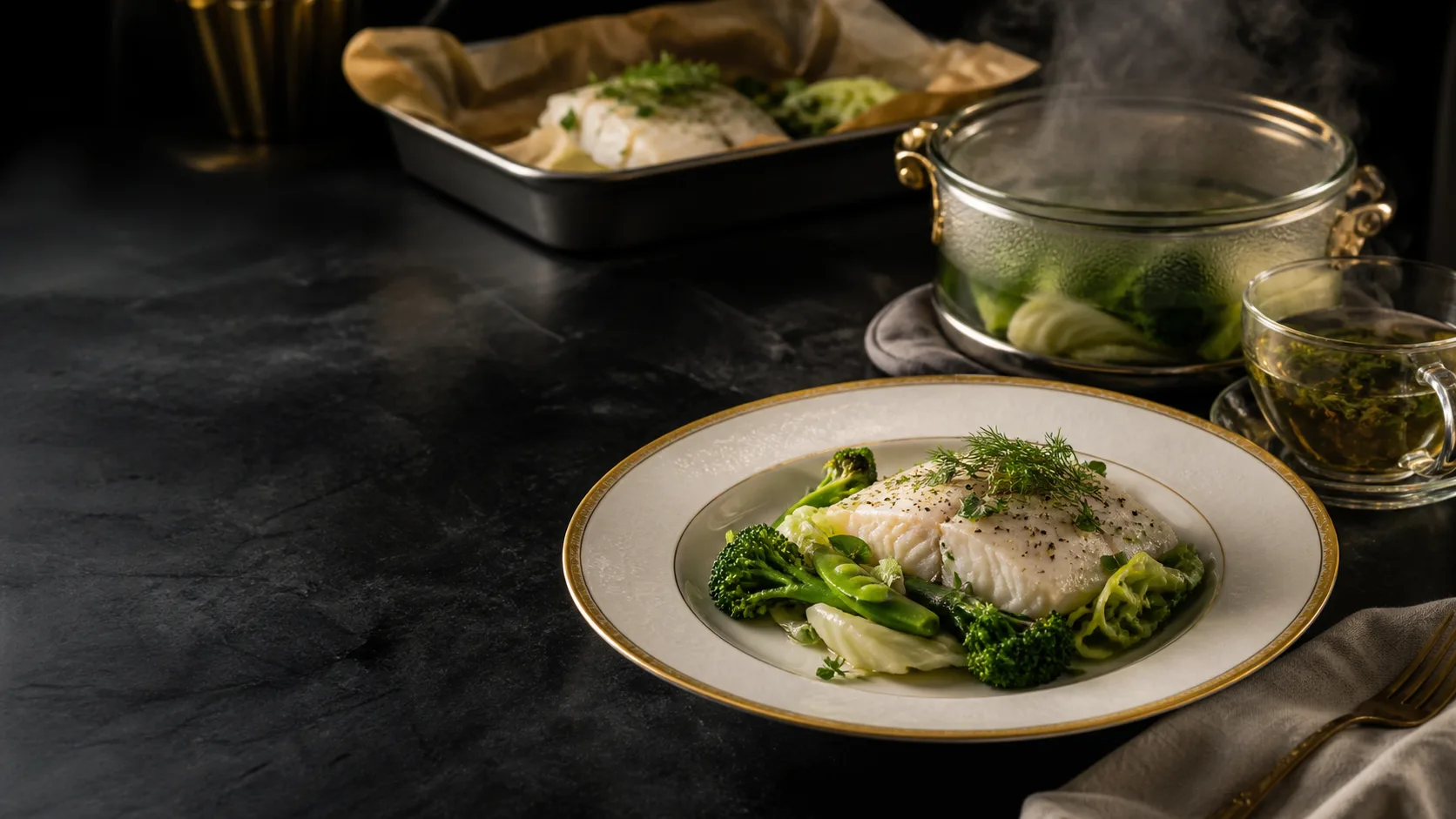
Low-fat cooking is not limited to plain steamed vegetables or dry chicken. Temperature, moisture, seasoning, and finishing ingredients all shape the result. These four methods can create flavorful meals while keeping added fat under your control.
These four techniques work with familiar ingredients and standard kitchen equipment. They are also flexible: you can bake vegetables for dinner, steam them for lunch, poach a protein for salads, and use an air fryer for quick reheating.
Before changing a recipe, remember that “low-fat” is not the same as “fat-free,” and packaged food claims do not tell the whole story. The FDA recommends checking the serving size and the grams of total and saturated fat on the Nutrition Facts label. Nutrient amounts are based on the listed serving, so eating two servings doubles those amounts. See the FDA’s guide to using the Nutrition Facts label.
1. Baking: Reliable, Hands-Off Cooking
Baking surrounds food with dry heat. It is useful for vegetables, potatoes, fish, skinless poultry, tofu, fruit, and casseroles. Because the oven cooks from all sides, you can prepare several portions at once without standing over the stove.
How to Bake with Less Added Fat
Line the pan with parchment paper or use an appropriate nonstick baking surface. Instead of automatically pouring oil over vegetables, add moisture and flavor with lemon juice, a small amount of low-sodium broth, tomato, vinegar, herbs, or spices. If you use oil, measure it rather than pouring directly from the bottle.
Cut ingredients to similar sizes and leave space between pieces. Crowding traps steam, which can make vegetables soft rather than browned. Turn food midway if the recipe benefits from even coloring.
For a simple tray meal, bake carrots, zucchini, bell peppers, and potatoes with smoked paprika, garlic, and lemon. Add a separately seasoned lean protein with a compatible cooking time, or cook it on another tray to reduce cross-contamination.
Best Uses for Baking
- sheet-pan vegetables;
- baked potatoes and sweet potatoes;
- white fish with lemon and herbs;
- tofu cubes with paprika and garlic;
- fruit with cinnamon;
- grain-and-vegetable casseroles.
2. Steaming: Moisture Without Heavy Sauces
Steaming cooks food with hot vapor rather than submerging it in water or fat. It works especially well for vegetables, fish, dumplings, and some grains. A steamer basket is helpful, but a saucepan with a tight lid and a rack or heat-safe insert can also work.
How to Steam Without Losing Texture
Bring the water to a steady simmer before adding the food. Keep the food above the water line, cover the pan, and check it early. Thin green beans may need only a few minutes, while dense carrots take longer. The goal is tender food that still has color and structure—not vegetables that collapse when lifted.
Season after steaming with lemon zest, fresh herbs, vinegar, mustard, garlic, ginger, or a measured spoonful of sauce. Because steaming does not create browning, a bright finishing flavor matters.
You can also combine methods. Steam broccoli until almost tender, then place it under the broiler briefly with herbs. This creates browned edges without requiring deep frying.
Best Uses for Steaming
- broccoli, green beans, carrots, and cabbage;
- fish fillets with ginger and scallions;
- vegetable dumplings;
- reheating cooked grains without drying them;
- preparing vegetables for soups, bowls, and wraps.
3. Poaching: Gentle Cooking in Flavorful Liquid
Poaching cooks food in liquid held below a vigorous boil. It is suitable for delicate proteins and fruit because the gentle heat reduces rough movement and helps preserve moisture.
Build Flavor into the Poaching Liquid
Water works, but broth, tomato liquid, or water flavored with lemon slices, bay leaf, peppercorns, garlic, or herbs produces more character. Avoid an aggressive rolling boil. Small movements at the surface are enough.
For fish, use a shallow pan and enough liquid to come partway up the fillet. For skinless chicken breast, keep the pieces similar in thickness and cook until the safe internal temperature is reached. The strained cooking liquid can sometimes become the base of a soup or sauce, provided it has been handled and cooked safely.
Poached protein is useful beyond dinner. Cool it safely, then slice it for sandwiches, add it to grain bowls, or combine it with vegetables and a light dressing.
Best Uses for Poaching
- white fish with lemon and herbs;
- skinless chicken or turkey breast;
- pears or apples with cinnamon;
- eggs, when appropriate for your meal plan;
- tofu simmered gently in seasoned broth.
4. Air-Frying: Fast Browning with Circulating Heat
An air fryer is essentially a compact convection oven. USDA explains that rapidly circulating hot air helps food become crisp and that air fryers can bake, roast, and reheat. Many foods cook in roughly 5 to 25 minutes at 350°F to 400°F, although the correct time depends on the appliance and food. Follow the manufacturer’s instructions and check doneness with a thermometer when needed. Read the official USDA air-fryer safety guidance.
How to Air-Fry Successfully
Do not overcrowd the basket. Air needs to circulate around the food; a packed basket can produce uneven or undercooked areas. Work in batches if necessary. Shake or turn pieces halfway through cooking.
Dry the surface of vegetables or tofu before seasoning so they brown instead of steaming. A light mist or measured amount of oil is optional, not automatic. Spices, breadcrumbs, crushed whole-grain cereal, or cornmeal can add texture, but check packaged coatings for their serving size, fat, sodium, and added sugars.
Air fryers are also effective for reheating baked vegetables or potatoes because circulating heat can restore texture better than a microwave.
Best Uses for Air-Frying
- potato or sweet-potato wedges;
- cauliflower and Brussels sprouts;
- chickpeas for a crunchy topping;
- tofu cubes;
- homemade vegetable patties;
- reheating previously baked foods.
Food Safety Applies to Every Method
A golden exterior does not prove that meat, poultry, or seafood is safe inside. FoodSafety.gov recommends using a food thermometer. Current federal guidance lists 165°F for poultry, 160°F for ground meat, and 145°F for fish. Whole cuts of beef, pork, veal, and lamb should reach 145°F followed by a three-minute rest. Check the complete safe minimum temperature chart.
Keep raw animal proteins separate from ready-to-eat foods. Wash hands and work surfaces, use clean plates for cooked food, and refrigerate perishable leftovers promptly. Most cooked leftovers should be used within three to four days or frozen; detailed storage times are available in the government cold food storage chart.
How to Add Flavor Without Relying on Fat
Build flavor in layers:
- Aromatic base: garlic, ginger, scallions, onion, or celery.
- Dry seasoning: paprika, cumin, coriander, oregano, thyme, or pepper.
- Acidity: lemon, lime, or vinegar added near the end.
- Fresh finish: parsley, dill, basil, cilantro, or mint.
- Texture: toasted breadcrumbs, chopped vegetables, or crisp air-fried chickpeas in an amount that fits your plan.
Salt and prepared sauces can contribute significant sodium, so compare labels and season gradually. A dish often needs acidity or fresh herbs—not simply more salt or oil.
Which Method Should You Choose?
Choose baking when you need several portions with minimal attention. Steam when you want speed and a tender texture. Poach when moisture is the priority. Air-fry when you want quick browning or crispness in a small batch.
You do not need to choose one method forever. A useful weekly routine might include baked vegetables on Sunday, poached protein for lunches, steamed greens for quick dinners, and air-fried potatoes later in the week.
Want easy recipes that put these methods into practice? Download the free recipe sampler, then explore the complete cookbook and meal-planning resources.
Disclaimer
This article is for general educational purposes only. It does not provide medical or individualized nutrition advice and is not intended to diagnose, treat, cure, or prevent any condition. Cooking needs and dietary tolerances differ. Consult a qualified healthcare professional if you have a medical condition, allergy, digestive concern, or prescribed diet.
Primary Sources
- FDA: How to Understand and Use the Nutrition Facts Label
- USDA FSIS: Air Fryers and Food Safety
- FoodSafety.gov: Safe Minimum Internal Temperatures
- FoodSafety.gov: Cold Food Storage Chart
Continue exploring
Related practical guides
Continue the low-fat cooking series
Practice each method with a focused step-by-step guide:
Want the recipes to go with this? There are twenty free low-fat recipes here, across eleven cuisines, with fat per serving stated on every one — available as a printable PDF.
Also on Aero Wellness: Sample diet for pancreatitis: a 7-day plan with fat per serving · Pancreatitis breakfast ideas: 12 options under 3 g of fat
— Sophia

Written by
Sophia W. Whitman
Recipe developer and author of the Pancreatitis Diet Cookbook for Beginners. Cooking has been my life’s work, and low-fat cooking is the corner of it I know best. Every recipe here lists fat per serving, so you don’t have to guess.